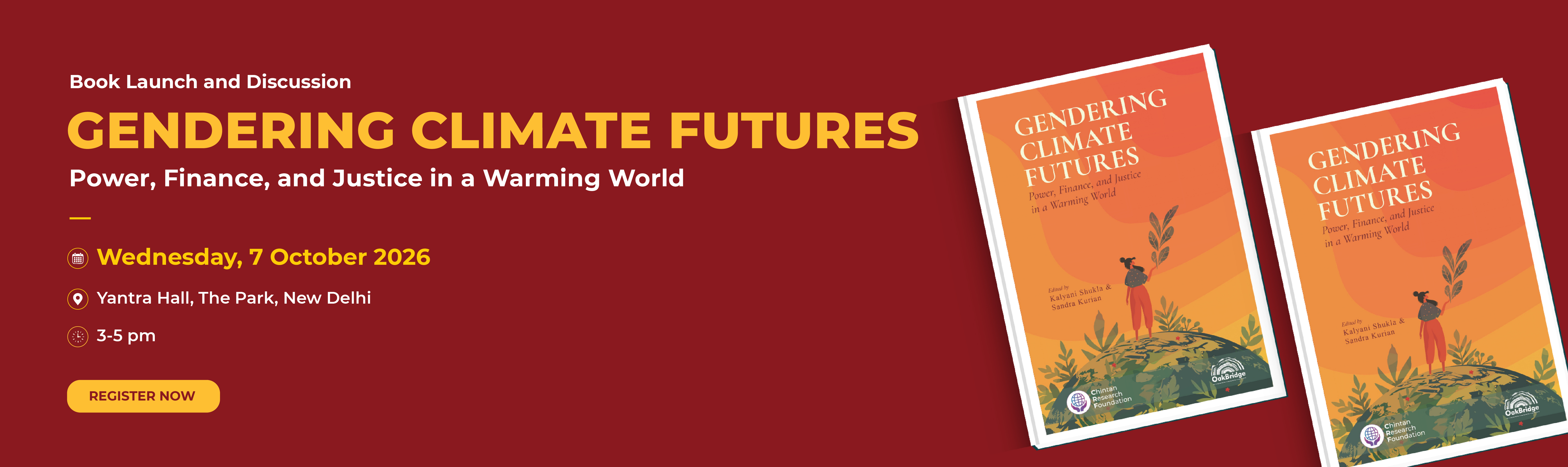
Gendering Climate Futures: Power, Finance, and Justice in a Warming World

From the Margins to the Principal Axis
Climate governance has reached a critical juncture where long-term frameworks, finance flows, and institutional structures are being locked in, making gender a fundamental organizing axis rather than a secondary consideration. The empirical evidence demonstrates that climate risks are highly unequal: FAO and UN Women data reveal that climate impacts could push up to 158 million more women into extreme poverty by 2050, with female-headed rural households suffering disproportionate income losses from extreme weather. In regions like South Asia, where nearly 75% of rural women workers manage agriculture despite holding only about 14% of land titles, rural adaptation already relies directly on women’s labor, knowledge, and collective institutions.
However, the global climate architecture has failed to match this reality on the ground. Under 1% of bilateral climate-gender assistance reaches local women’s rights organizations, and fewer than half of surveyed nations maintain coordination mechanisms to integrate gender into climate policy. The rollout of updated national climate plans and the launch of the nine-year Belém Gender Action Plan (2026–2034) offer an immediate window to bridge this gap. Transforming normative commitments into direct capital, asset ownership, and decision-making power is essential to ensure a effective and just transition.
About the Book
Gendering Climate Futures: Power, Finance, and Justice in a Warming World is written for this moment. Organised around the premise that gender shapes climate change at every scale, from household hearth to the negotiating floor at COP, the volume deliberately moves across those scales rather than settling at any one of them. Its empirical focus is South Asia, and India in particular, a region whose dense landscape of women’s collectives, rural livelihoods, decentralised energy systems, and climate diplomacy offers fertile ground for examining the relationship between gender, climate action, and agency. The book is organised in two sections.
Section 1: ‘Redefining Climate Stress and Finance through a Gender Lens’ begins close to the ground. The first chapter offers a feminist political ecology account of why women occupy the frontlines of climate stress. The next chapter grounds this diagnosis in agriculture, translating regional evidence on women farmers’ exclusion from land and energy assets into state-level policy for Madhya Pradesh, India. This is followed by an interrogation of how the procedural gender safeguards of climate finance obscure rather than redistribute structural power. This critique is further extended constructively, examining instruments such as blended finance, guarantee facilities and gender-linked bonds that could move climate finance from symbolic inclusion towards genuine influence.
Section 2: ‘Empowering the Transition’ turns from diagnosis to agency. It starts with documenting women’s entrepreneurial leadership across sustainable agriculture, eco-tourism, and renewable energy, alongside the constraints of finance, mobility, and care work that continue to limit it. The next chapter positions Self-Help Groups as common institutions equipped to govern decentralised energy infrastructure, arguing from Rajasthan’s (India) experience that the samaj-bazar-sarkar (society-marketgovernment) triad can systematically dismantle barriers to women’s institutional leadership. The volume closes on the international stage, examining why women’s representation in South Asian climate diplomacy remains marginal despite formal recognition of gender vulnerability in national policy.
Methodologically, the volume is intentionally plural, moving between feminist political ecology, policy analysis, case study and grassroots testimony, and quantitative diplomatic tracking. Its central argument is that the question ‘where are the women?’ is in fact several questions about land, labour, capital and voice, that share a common answer: women are neither simply victims of the climate transition nor simply its instruments, but are already doing the work of adaptation, usually without commensurate recognition, resourcing, or representation.